
Dishwasher Drain Clogged? How to Unclog It Fast
Key Takeaways:
A clogged dishwasher drain usually clears in 20–30 minutes with household tools, and is rarely a serious failure.
The most common culprits are the filter, drain hose, air gap, and garbage disposal connection — all of which you can check yourself.
Standing water at the bottom of the tub, gritty dishes, gurgling sounds, and foul odors are the tell-tale signs of a blockage.
Working from easiest to hardest — running the disposal, cleaning the air gap, and clearing the filter and sump — solves most clogs by step four or five.
If water backs up into the kitchen sink at the same time, the blockage is likely in the shared drain line, not the dishwasher itself.
Skipping regular filter cleaning is the single biggest long-term cause of clogs, so a monthly two-minute rinse prevents most blockages.
A dishwasher drain clogged with food debris, grease, or a blocked filter usually clears in 20 to 30 minutes using a few household tools. The most common culprits are the filter, the drain hose, the air gap, and the garbage disposal connection — and you can check all of them yourself before calling a technician.
Standing water at the bottom of the tub after a cycle is the classic sign, but it is almost never a serious failure. In most kitchens the fix is simply clearing built-up gunk from one of a handful of spots. This guide walks you through exactly how to unclog the drain, in order, plus what causes the blockage and how to keep it from coming back.
Is Your Dishwasher Drain Clogged? The Signs
Before you start, confirm you are dealing with a blockage and not a different fault. These are the tell-tale signs of a dishwasher drain clogged somewhere in the system:
Water pooling at the bottom of the tub after the cycle ends
Dishes coming out gritty, filmy, or still dirty
A gurgling sound as the machine tries to drain
A foul, stagnant smell from inside the dishwasher
The cycle stopping partway through with water left behind
If the machine will not drain at all and shows an error, the problem may run deeper than a simple clog — our guide on a dishwasher that won't drain covers those pump and control faults.
What You'll Need
Gather these before you start and the whole job goes faster: rubber gloves, a sponge or cup to bail water, a soft brush or old toothbrush, a screwdriver, a bucket and towels for the drain hose, and a cup each of baking soda and white vinegar. Nothing specialized is required.
How to Unclog a Dishwasher Drain, Step by Step
Here is how to clear a dishwasher drain clogged with food and grease, working from the easiest fix to the most involved:
Run the garbage disposal. Most dishwashers drain through the disposal, so a bit of food stuck there blocks everything. Run it for a few seconds with the water on before anything else.
Clean the air gap. If you have that small cylinder on the counter beside the faucet, twist off the cap and clear any debris inside — a clogged air gap alone can back water up.
Cut the power and bail the water. Switch the dishwasher off at the breaker for safety, then sponge or scoop the standing water out of the tub so you can work.
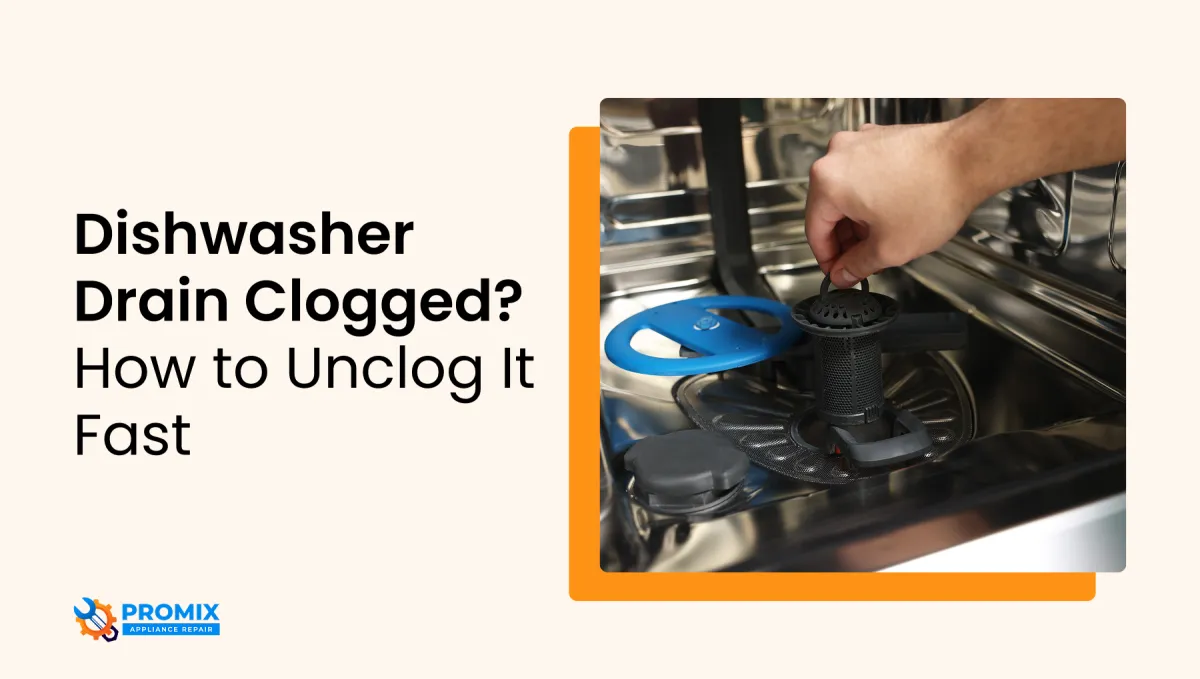
Remove and clean the filter. Take out the bottom rack, twist out the cylindrical filter at the base (usually a quarter turn counter-clockwise), and rinse it under hot running water. Scrub the mesh with your brush to lift trapped grease and food, paying attention to the fine outer screen where paste-like buildup hides. A filter that has not been cleaned in months may need a soak in warm soapy water.
Clear the sump and drain basket. With the filter out, shine a light into the well beneath it and check for glass, seeds, labels, toothpicks, or small bones. Remove anything you find by hand or with tweezers — this hidden debris is what jams the pump if it slips further in, so clearing it now prevents a bigger problem later.
Flush the drain hose. Look under the sink where the hose connects; straighten any kink, and if it is still blocked, disconnect it into a bucket and flush it through with hot water.
Pour a baking soda and vinegar flush. Tip a cup of baking soda then a cup of vinegar into the drain basket, wait 15 minutes, and rinse with a kettle of hot water to break down grease.
Run a short rinse cycle to confirm the water now drains freely.
Most of the time, a dishwasher drain clogged with everyday debris is flowing again by step four or five.
Still Clogged? Check These 4 Spots
If your dishwasher drain clogged again after cleaning the filter, a deeper blockage is likely. Check these before assuming the worst:
The disposal knockout plug. If a new garbage disposal was fitted recently, the installer may have left the knockout plug in place, sealing off the dishwasher drain line entirely. Removing it solves a surprising number of no-drain cases.
A kinked or sagging drain hose. A hose crushed behind the cabinet or looped too low traps water and debris. Reroute it so it rises in a high loop before dropping to the drain.
The check valve. A small flap near the pump lets water out but not back in. If it jams with debris, water sits in the tub. It can often be cleared by hand once accessed.
The drain pump. Broken glass or a bone can jam the pump impeller. If everything else is clear and the machine still holds water, the pump is the likely suspect and usually a job for a technician.
Dishwasher and Sink Backing Up Together?
Here is a clue many people miss: if water backs up into your kitchen sink at the same time the dishwasher won't drain, the blockage is probably not inside the dishwasher at all. Both appliances usually share the same drain line under the sink, so a clog further downstream shows up in both places at once. In that case, cleaning the dishwasher filter will not help — the real fix is clearing the shared drainpipe or the disposal connection. Try running the disposal and plunging the sink first; if both clear together, you have found the culprit. If only the dishwasher holds water while the sink drains fine, the blockage is inside the dishwasher, and the filter-and-hose steps above are exactly what you need.
This distinction saves a lot of wasted effort. Before you take the whole dishwasher apart, spend thirty seconds checking whether the sink drains normally — it tells you immediately which side of the plumbing to focus on.
What Causes a Dishwasher Drain to Clog
Understanding what leaves a drain clogged in the first place helps you avoid a repeat. The usual causes are food scraps and grease building up in the filter and sump, a garbage disposal that was not run before the cycle, hard-water mineral scale narrowing the hose over time, and large debris like seeds, fruit labels, or broken glass slipping past the filter. Grease is a quiet offender in particular: it washes off warm plates as a liquid, then cools and hardens inside the hose where you cannot see it. And skipping regular filter cleaning is the single biggest reason drains clog over the long term — the mesh gradually packs with a paste of food and fat until water can no longer pass.
How to Prevent a Clogged Dishwasher Drain
To stop the clog from returning, build these quick habits into your routine:
Scrape plates before loading — you do not need to pre-rinse, but remove bones, seeds, and large scraps.
Clean the filter monthly. A two-minute rinse prevents most blockages.
Run hot water at the sink for a few seconds before starting a cycle, so the dishwasher fills with hot water immediately.
Run the garbage disposal before every dishwasher cycle.
Run a monthly cleaning cycle with a dishwasher cleaner or vinegar to dissolve grease and scale.
These habits keep the filter, hose, and pump clear, which is where a blockage nearly always begins.
Brand-Specific Drain Quirks Worth Knowing
The unclogging steps are the same for every dishwasher, but a few brands have habits worth checking first. Bosch dishwashers use a fine two-part filter that clogs faster than most if plates are not scraped, and they will flash an error and stop mid-cycle when the drain is blocked rather than simply leaving water behind — so a Bosch that quits early is often just a dirty filter. Samsung models frequently show a specific drain error code when the sump or hose is blocked, which points you straight to the problem, and their check valves are a common sticking point. LG dishwashers tend to trap debris in the sump area beneath the filter, so it is worth reaching in and clearing that well by hand even when the filter itself looks clean. Whichever brand you own, the filter and sump are always the first place to look, but knowing your machine's tendency saves time.
How Long It Takes and What to Expect
Clearing a blocked drain is one of the least intimidating appliance fixes there is. A straightforward filter-and-sump cleaning takes about 15 minutes; adding a hose flush or air-gap check pushes it to 30. The messiest part is bailing the standing water, so keep a bucket and towels close. You do not need to move the dishwasher for most of these steps — only the hose and pump checks call for pulling it out, and even those are within reach of a confident DIYer. If you have cleared the filter, sump, hose, and air gap and the water still will not go down, that is your signal the blockage is in the pump or check valve, where professional tools make the job faster and safer.
When to Call a Professional
Some blockages sit beyond the reach of a DIY flush. Call a technician if the drain pump is jammed or failed, if water backs up into both the dishwasher and the sink (a sign of a shared plumbing clog), or if the machine still holds water after you have cleared the filter, hose, and air gap. A pro can test the pump and check valve directly and clear a stubborn clog deep in the system without risking damage to the hoses or electronics. If your unit is older and the pump has failed, our guide on dishwasher repair cost vs. replacement can help you weigh the numbers.
Dishwasher Drain Clogged FAQ
Why is my dishwasher drain clogged?
The most common reasons are a dirty filter, food and grease in the sump, a garbage disposal that was not run first, or a kinked drain hose. Clearing the filter and running the disposal fixes the majority of cases.
Will baking soda and vinegar unclog a dishwasher drain?
Yes, for grease and light food blockages. Pour baking soda then vinegar into the drain basket, wait 15 minutes, and flush with hot water. It will not clear a physical object like glass, which has to be removed by hand.
Can a garbage disposal cause a dishwasher drain to clog?
Absolutely. Dishwashers often drain through the disposal, so food left in it — or a knockout plug left in after a new disposal is installed — blocks the dishwasher drain completely.
How often should I clean my dishwasher filter?
About once a month for most households, or more often if you run heavy loads or skip scraping plates. Regular filter cleaning is the best way to keep your drain from clogging in the first place.
Is a clogged dishwasher drain an expensive repair?
Usually not. Clearing the filter, hose, or air gap costs nothing but time. Even a professional visit for a jammed pump or check valve is typically an affordable repair compared with replacing the machine.

