Why DIY Appliance Repair Often Makes Problems Worse
Your dishwasher is not draining. You find a tutorial online, order a part, and spend your Saturday taking it apart. Three hours later, it still does not drain. Now it also leaks.
If this sounds familiar, you are not alone. It is one of the most common outcomes of DIY appliance repair.
Modern appliances are not the mechanical devices they once were. They are digitally controlled systems with circuit boards, integrated sensors, and tightly calibrated components. A repair that looks straightforward in a tutorial can go wrong in a dozen ways that the video never mentions. And when it does, the cost of fixing the damage almost always exceeds what a professional repair would have cost from the start.
In this guide, you will learn exactly why DIY appliance repair so often makes problems worse, which repairs should never be attempted without professional training, and what to look for in a reliable appliance repair service in Boston, MA.homeowner
Why Homeowners Attempt DIY Appliance Repair
The appeal is understandable. Online tutorials make repairs look straightforward. Replacement parts are available cheaply online. And calling a professional feels like an unnecessary expense when the fix appears obvious.
The problem is that tutorials are generic. Your appliance is not. A video showing a belt replacement on one dryer model may not account for the sensor placement, wiring configuration, or disassembly sequence of your specific unit. The gap between what a tutorial shows and what your appliance requires is where most DIY repairs go wrong.
What Should You Not DIY?
There are categories of appliance repair that should never be attempted without professional training regardless of skill level:
Any repair involving gas lines, including gas stoves, ovens, and gas dryers
High-voltage components, including microwave capacitors, washer and dryer motors, and control boards
Refrigerant handling in refrigerators and freezers
Internal wiring repairs on any appliance
Control board replacement or diagnostics
These repairs carry risks of electrocution, gas leaks, fire, and irreversible damage to the appliance that no tutorial can fully mitigate.
Is It Safe to Repair Appliances Yourself?
For very basic maintenance tasks, such as cleaning a dryer vent, replacing a water filter, or descaling a coffee machine, yes. For anything involving disassembly, electrical components, or gas connections, the honest answer is: not without proper training. The risks are not theoretical. Capacitors in appliances such as microwaves can hold a fatal electrical charge even when the appliance is unplugged. A gas connection that is not properly torqued can fail silently and create a leak that goes undetected for days.
The Most Common DIY Appliance Repair Mistakes
Misdiagnosis. Without diagnostic training and proper tools, it is easy to identify the wrong cause for a symptom. A homeowner who hears a grinding noise from their washing machine may replace the drum bearing when the actual fault is a worn motor coupling. The symptom may briefly improve before the real problem causes a more serious failure.
Replacing the wrong part. A misdiagnosis leads directly to replacing a functional component while the actual fault, such as a faulty control board or damaged wiring, remains unaddressed. This wastes money on the part and leaves the appliance in a worse diagnostic state for the technician who eventually has to assess it.
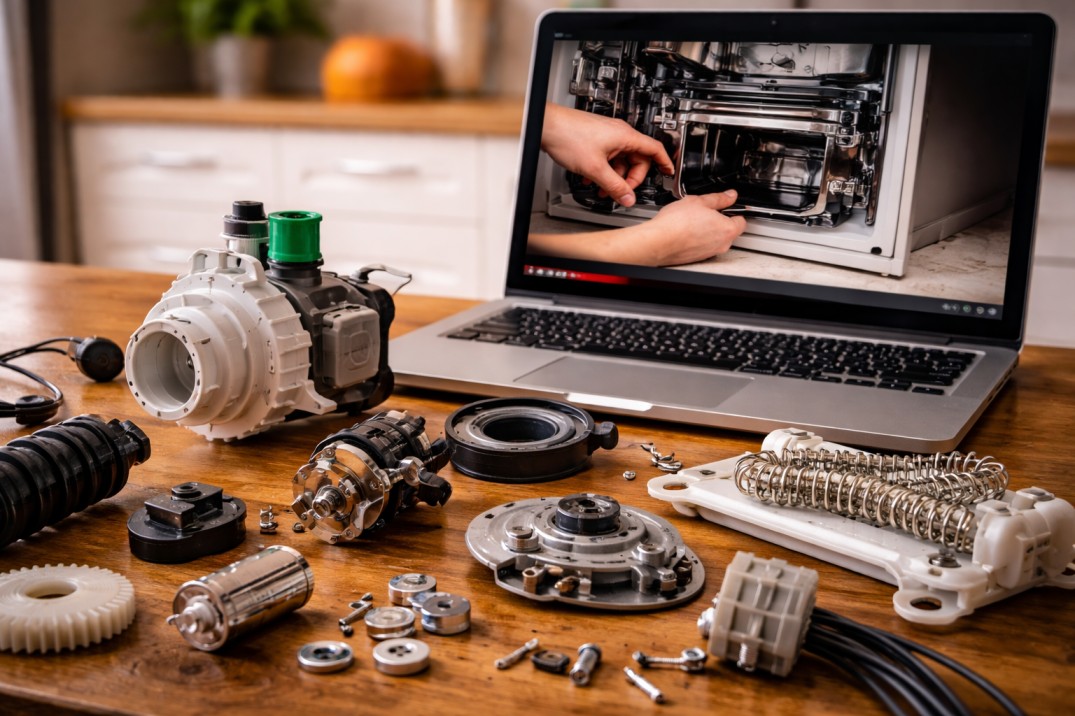
Using non-OEM parts. Third-party, universal, or cheaper knock-off components are not manufactured to the tolerances of the original part. They may fit and function initially while running outside the parameters the appliance was designed for. This accelerates wear on adjacent components and can create new faults within months of the repair.
Improper tools. Modern appliances require specialized tools for safe disassembly. Using a standard screwdriver on delicate electronics can strip fasteners, crack panels, and break sensors. A broken sensor that was not part of the original fault now becomes a second repair.
Reassembly errors. Leftover screws, misaligned components, and incorrectly routed wiring are among the most damaging outcomes of DIY repair. A motor with a misaligned mounting can vibrate itself to failure within weeks. A wire routed incorrectly can chafe against a moving part and cause an electrical fault that was not present before the repair.
Static discharge. Touching a circuit board without proper electrostatic grounding can destroy sensitive electronics instantly and invisibly. The board may appear undamaged while being completely non-functional, leading to a misdiagnosis of the fault on any subsequent professional assessment.
Can DIY Appliance Repairs Cause More Damage?
Yes, and this is the rule rather than the exception for anything beyond basic maintenance. The domino effect is well documented in appliance repair: an attempt to fix one component, such as a belt, can break an adjacent component, such as a sensor, due to improper handling. What began as a single fault becomes two. The professional repair that follows now costs more than it would have if the appliance had been brought in at the point of the original fault.
Signs DIY Appliance Repair Has Made Things Worse
If you or someone else has already attempted a repair, watch for these indicators that the attempt has introduced new problems:
The original fault persists alongside a new symptom that was not previously present
The appliance now makes a noise it did not make before the repair attempt
A circuit breaker that was not previously tripping now trips when the appliance runs
The appliance operates inconsistently or stops mid-cycle
Visible gaps, misaligned panels, or components that do not sit flush after reassembly
A burning smell that was not present before the repair
Any of these signs following a DIY attempt should prompt immediate professional assessment.
Why DIY Appliance Repair Is Dangerous
Electric shock and electrocution. Even with the appliance unplugged, capacitors in appliances such as microwaves can retain a lethal electrical charge. High-voltage components in washing machine motors and dryer heating elements carry risks that are not neutralized simply by disconnecting from the mains. Without training in how to safely discharge these components, the risk is real and serious.
Fire hazards. Improperly connected wiring is one of the most common causes of appliance fires. A wire that is reconnected without proper crimping or soldering, or that is routed incorrectly during reassembly, can arc under load and ignite surrounding materials. This may not happen immediately. It may happen weeks after the repair, with no visible connection to the work that was done.
Gas leaks. A gas stove, oven, or dryer with a connection that has been disturbed during a repair attempt and not properly resealed can develop a slow gas leak. Gas leaks are not always immediately detectable and can accumulate to dangerous concentrations before ignition. Any repair that involves proximity to gas lines or fittings should be handled exclusively by a licensed professional.
Voiding the manufacturer warranty. Most manufacturer warranties are immediately voided if an unauthorized person attempts a repair. If the repair fails, the manufacturer will not cover subsequent professional repair costs, leaving the full expense with the homeowner.
What Are the Dangers of Wrong Use of Home Appliances?
Beyond repair attempts, incorrect day-to-day use accelerates appliance wear and creates safety risks:
Overloading a washing machine stresses the motor and drum bearings, leading to premature failure
Running a dryer with a blocked vent creates fire risk through lint accumulation and overheating
Using a refrigerator with a worn door seal forces the compressor to overwork, shortening its lifespan
Operating a dishwasher with a damaged door latch risks water leakage onto electrical components beneath the unit
How DIY Repairs Lead to Costly Mistakes
A professional technician may take fifteen minutes to diagnose a fault that a homeowner spends hours or days attempting to identify. The diagnosis is accurate because it uses proper tools, knowledge of common fault patterns for specific models, and experience with how these appliances fail. A DIY repair based on an inaccurate diagnosis wastes money on the wrong part, leaves the actual fault in place, and may introduce new faults that increase the eventual professional repair cost significantly. In some cases, a botched DIY repair makes the appliance uneconomical to repair at all, forcing a full replacement that a timely professional repair would have avoided.
DIY Refrigerator Repair Risks
Refrigerator repairs frequently involve the compressor, condenser coils, refrigerant lines, and control boards. Refrigerant handling requires certification and specialized equipment. An incorrect diagnosis of a cooling fault, one of the most common reasons homeowners attempt refrigerator repairs, can result in unnecessary part replacement while the real fault, often a refrigerant leak or compressor issue, continues to worsen. Our refrigerator repair service covers all major brands across Boston, MA with accurate diagnosis and OEM parts.
DIY Washing Machine Repair Risks
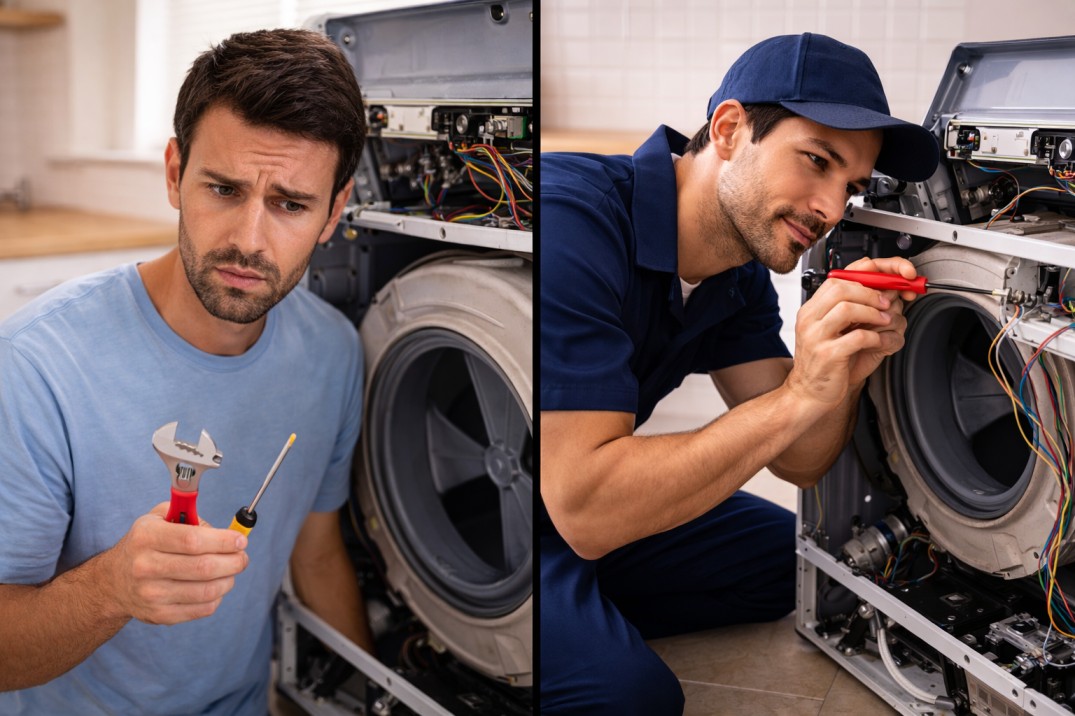
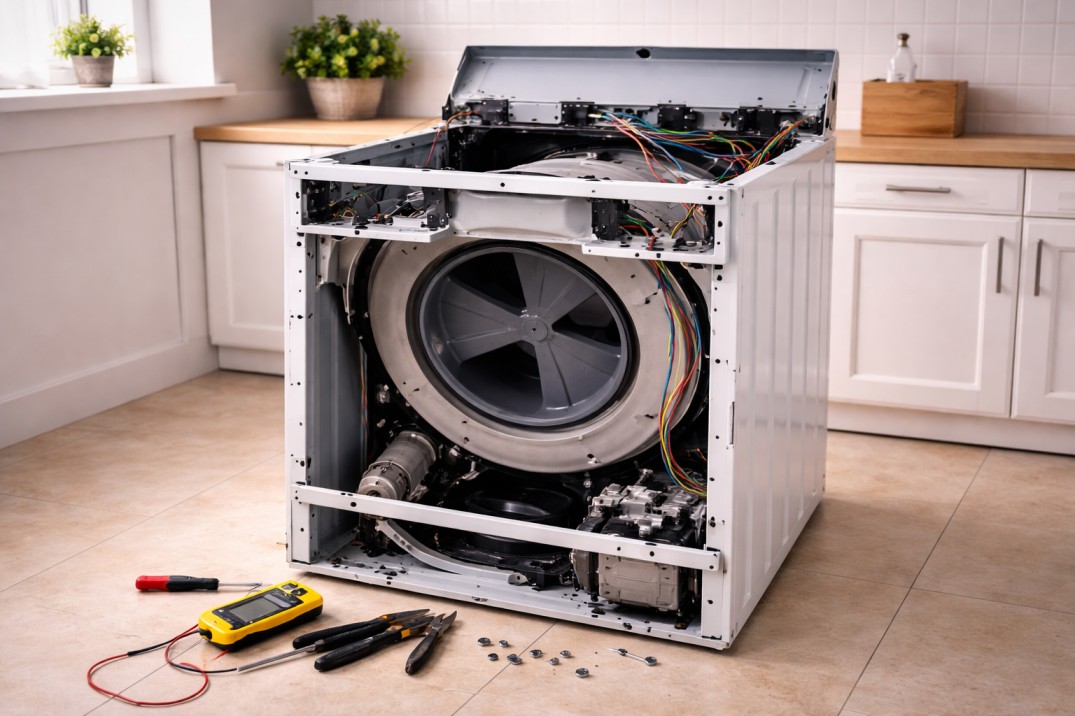
Washing machines combine high-voltage electrical components with water, creating a uniquely hazardous environment for untrained repair attempts. Common DIY mistakes include improper drum bearing replacement that leaves the drum misaligned, water inlet valve replacement that results in leaks at the connection point, and control board handling without electrostatic protection. Our washer and dryer repair service provides safe, professional diagnosis and repair across the Boston, MA area.
DIY Oven and Stove Repair Risks
Oven and stove repairs that involve gas connections, igniter replacement, or control board work carry risks of gas leaks, electrical faults, and fire if not performed by a trained technician. A gas connection disturbed during a DIY repair and not properly resealed is a serious hazard. Our stove, oven and range repair service handles all gas and electric appliance repairs safely and professionally.
DIY Dishwasher Repair Risks
Dishwasher repairs frequently involve water inlet valves, drain pumps, and door latch assemblies. An incorrectly fitted water inlet valve can leak onto the electrical components beneath the dishwasher, creating a serious shock and fire hazard. Door latch repairs that leave the seal imperfect result in water leakage during cycles. Our dishwasher repair service covers all major dishwasher brands across Boston, MA.
What Is the 50/50 Rule for Appliances?
The 50/50 rule is a practical guideline: if the cost of repairing an appliance exceeds 50% of the cost of replacing it, and the appliance is more than halfway through its expected lifespan, replacement is generally the better choice. This rule is most useful when applied by a professional who can accurately assess both the repair cost and the overall condition of the appliance. A DIY repair attempt that fails to resolve the fault and introduces additional damage can push a repairable appliance past this threshold unnecessarily.
Is It Better to Repair or Replace an Appliance?
For appliances within the first half of their expected lifespan with a clearly identified, contained fault, repair is almost always the better choice financially and practically. For appliances approaching or beyond their expected lifespan with multiple developing faults, replacement may be more economical. The key is an accurate professional assessment. A diagnosis based on a misidentified fault, whether from a DIY attempt or an inadequate professional inspection, leads to the wrong decision in either direction.
Real Tips: What to Do Instead of DIY
Before attempting any repair, run through this checklist:
Check the basics first. Is the appliance plugged in? Has the circuit breaker tripped? Is the water supply connected? A significant number of apparent faults have simple, non-repair explanations.
Check for a recall. Visit the Consumer Product Safety Commission website to verify whether your appliance has an active recall. A recalled appliance may be repaired or replaced by the manufacturer at no cost.
Check the warranty. If your appliance is still under manufacturer or extended warranty, any repair should go through the warranty provider. A DIY attempt will void the warranty immediately.
Document the symptoms. Before calling a technician, note exactly what the appliance is doing, when the fault started, whether it is consistent or intermittent, and any sounds, smells, or visible signs. This information significantly speeds up professional diagnosis.
Do not use the appliance if it is showing safety warning signs. Sparking, burning smells, warm plugs, and tripping breakers are signals to unplug and stop use, not to attempt a repair.
Why Our Approach Is Different in Boston, MA
Most appliance repair services respond to the reported fault and fix what is broken. Our approach in Boston, MA goes further.
Every visit begins with a full appliance assessment, not just a look at the reported symptom. We identify the root cause of the fault, check the condition of adjacent components, and give you an honest evaluation of whether the repair is the right choice given the appliance's age and overall condition.
Here is what sets us apart:
Accurate diagnosis from the start. We use proper diagnostic tools and model-specific knowledge to identify the actual fault, not the most likely guess. This means the right part is ordered the first time and the repair resolves the problem.
OEM and certified parts only. We do not use third-party knock-off components. Every replacement part meets the original manufacturer's specifications.
Licensed and insured technicians. Our team is trained in electrical safety, gas appliance handling, and refrigerant protocols. We do not cut corners on safety procedures.
Transparent assessment. If the 50/50 rule applies and repair is not the right choice, we will tell you clearly rather than perform a repair that will not serve your long-term interests.
Local expertise. We work across Boston, MA and understand the specific appliance challenges of the area, from older wiring in triple-deckers to the seasonal demand placed on heating and cooling appliances in New England winters.
The Bottom Line
DIY appliance repair rarely saves money and frequently makes the original problem worse. Misdiagnosis, incorrect parts, improper tools, and reassembly errors turn a single fault into multiple faults. Safety risks including electric shock, fire, and gas leaks are real and well documented.
The right approach is to stop using the appliance when a fault develops, document the symptoms, and contact a professional. Our team offers trusted appliance repair services in Boston, MA, providing accurate diagnosis, safe repair, and honest assessment for all major home appliances.
Frequently Asked Questions
What is the 50/50 rule for appliances?
If the cost of repair exceeds 50% of the cost of replacement and the appliance is past the midpoint of its expected lifespan, replacement is generally the better choice both financially and from a safety standpoint.
What are the dangers of wrong use of home appliances?
Incorrect use accelerates wear, voids warranties, and creates safety risks including fire, flooding, and electrical faults. Overloading, blocked venting, and worn seals are among the most common causes of preventable appliance failures.
Is it better to repair or replace an appliance?
For appliances in the first half of their lifespan with a single identified fault, repair is usually the right choice. For older appliances with multiple developing faults or a repair cost exceeding 50% of replacement cost, replacement is generally more economical and safer.
What should you not DIY?
Any repair involving gas lines, high-voltage components, refrigerant handling, internal wiring, or control board replacement should not be attempted without professional training. The risks of electrocution, gas leaks, fire, and irreversible appliance damage are too significant.

