
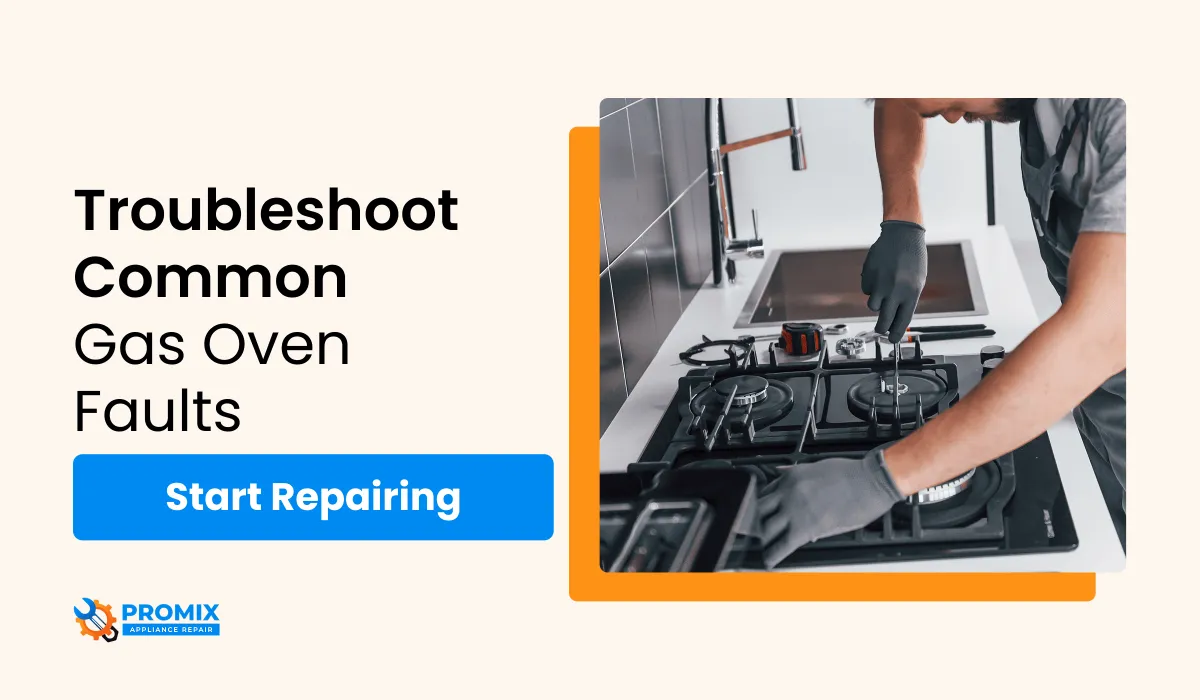
Gas Oven Problems: 5 Common Faults (Won’t Heat or Light)
A gas oven is designed to deliver steady heat and reliable cooking performance. Over time, even well-maintained ovens can develop issues. A drop in temperature, delayed ignition, or a burner that won’t stay lit can interrupt your cooking routine.
Understanding how the oven works and which parts commonly fail can help you identify the problem and decide whether it’s something you can fix at home.
1. Gas Oven Not Heating
When a gas oven turns on but does not reach the set temperature, the problem is often a weak igniter or blocked burner ports. The igniter must glow bright enough to open the gas valve. If it weakens, the oven cannot build a proper flame.
In some cases, the gas safety valve does not open fully, limiting gas flow. Grease or debris around the burner can also restrict flame spread, leading to slow or uneven heating.
How to Fix It
Check whether the igniter glows bright and steady
Test the igniter with a multimeter to confirm continuity
Inspect the gas safety valve for signs of wear
Clean the burner ports to restore proper gas flow
This is one of the most common gas oven not heating issues and is often resolved by replacing a weak igniter.
2. Gas Oven Won’t Light
If you hear clicking but the gas oven won’t light, the issue is usually related to ignition or gas flow. A dirty igniter can prevent a strong spark. Grease buildup may stop the spark from reaching the burner.
A damaged igniter can also cause inconsistent sparks, making the burner light randomly. If the gas line is partially closed or kinked, the burner may not receive enough gas to ignite. Loose wiring around the ignition module can also interrupt the spark cycle.
⚠️ Safety note: If you smell gas or are unsure about testing components, stop and contact a professional technician.
3. Gas Oven Not Working at All
If a gas oven shows no lights, no sound, and no response from the control panel, the problem is usually electrical rather than gas-related. A gas oven still relies on electricity to power the igniter, display, and control board.
When the thermal fuse blows, it cuts power to protect the appliance from overheating. In some cases, the control board may fail due to age or internal damage, causing the oven to stop working completely.
How to Fix It
Check the outlet, plug, and power connection
Reset the oven by unplugging it for one minute
Test the thermal fuse for continuity
Inspect the control board for burnt or damaged components
These steps help determine whether a gas oven not working issue can be fixed at home or requires professional service.
4. Oven Burner Not Working (Uneven or No Flame)
When an oven burner produces a weak or uneven flame, the cause is often clogged burner ports or poor gas regulation. Grease, food particles, or carbon buildup can block the burner holes and disrupt flame distribution.
A misaligned burner cap can also distort the flame and create hot spots. If gas pressure is unstable, the burner may light briefly and then shut off. A failing flame sensor can trigger the system to extinguish the flame as a safety measure.
How to Fix It
Clean clogged burner holes using a needle or soft brush
Adjust the burner cap so it sits properly on the base
Check the gas regulator for stable pressure
Replace a faulty flame sensor if the burner will not stay lit
This resolves most oven burner not working issues and helps restore even heat across the oven.
⚠️ Safety note: If you smell gas or are unsure about electrical testing, stop troubleshooting and contact a professional technician.
5. Gas Oven Not Igniting Properly
If the igniter sparks repeatedly but the burner lights only after a delay, the issue is often caused by carbon buildup, a weak igniter, or a gas valve that opens too slowly. Carbon around the igniter tip weakens the spark and increases ignition time.
A slow igniter heats at a reduced rate, allowing gas to collect before the flame appears. A delayed gas valve can also cause late ignition and occasional gas odors during startup.
How to Fix It
Remove carbon buildup from the igniter and burner area
Replace worn igniters that spark slowly
Tighten or replace damaged wiring harnesses
Inspect the gas valve for delayed opening
These steps help correct gas oven not igniting issues and reduce the chance of gas buildup before ignition.
For a complete breakdown of every reason a range won't heat, see our full guide on why your oven isn't heating.
Keep Your Gas Oven Running Smoothly with Promix Appliance Repair
Many common gas oven problems, including gas oven not heating, burners not working properly, or delayed ignition, can be diagnosed at home with basic tools and careful inspection.
However, if problems continue or you notice unusual odors or electrical issues, it’s best to seek professional help. Promix Appliance Repair provides gas oven repair service to restore gas oven performance and keep your kitchen operating smoothly.
Need help today? Contact Promix Appliance Repair to schedule service and get your oven working properly again.

