
How Long Does a Refrigerator Last? Lifespan by Type
Key Takeaways:
A refrigerator lasts 10–15 years on average, with most units running about 13 years before needing replacement.
Simplicity lasts longest: top-freezer models can reach 18 years, while feature-packed French door and side-by-side units trade a few years of life for convenience.
Dirty condenser coils are the single most common cause of early failure, forcing the compressor to overwork.
Poor ventilation, worn door seals, and improper loading all shorten a fridge's lifespan.
Cleaning the coils every 6–12 months, checking door seals, and setting the right temperature (37–40°F fridge, 0°F freezer) can add years of life.
Repair if the unit is under 8 years old or needs a minor part, but replace if the compressor fails on a fridge already past 10–12 years.
Custom HTML/CSS/JavaScript
On average, a refrigerator lasts 10 to 15 years, with most units running about 13 years before they need replacing. But that average hides a lot: a simple top-freezer model can push 18 years, while a feature-packed French door with an ice and water dispenser may tap out closer to 10. So the real answer to how long does a refrigerator last depends on three things — the type you own, the brand, and how well you maintain it.
But how long does a refrigerator last, really? This guide breaks it down by type, brand, and upkeep — plus the warning signs that yours is failing and a simple rule for deciding whether to repair or replace it.
Refrigerator Lifespan by Type
Not all fridges age the same way. As a rule, the more moving parts and electronics a model has, the shorter its life. So how long does a refrigerator last, broken down by configuration?
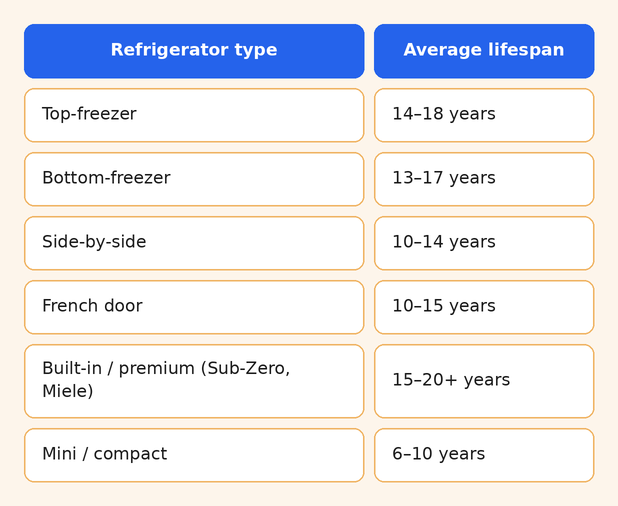
The pattern is clear: simplicity lasts. Top-freezer units win on longevity because they have the fewest components to fail, while French door and side-by-side models trade a few years of life for convenience features. It also helps to think about repair costs before you buy — the fancier the model, the more expensive the parts tend to be down the road. One caveat for modern units — even when the cooling system is healthy, the smart touchscreen and Wi-Fi parts often last only 3 to 7 years.
Why Some Refrigerators Die Sooner Than Others
Two identical fridges can last a decade apart. So how long does a refrigerator last in your specific kitchen? These factors decide it:
Dirty condenser coils. Dust-caked coils force the compressor to overwork — the single most common cause of early failure.
Poor ventilation. A fridge crammed against a wall or next to an oven runs hotter and wears faster.
Worn door seals. Loose gaskets leak cold air, making the motor run nearly non-stop.
Overloading or underfilling. Both hurt airflow and strain the system.
Brand and build quality. Premium brands routinely outlast budget ones by years.
7 Warning Signs Your Refrigerator Is Failing
Wondering whether yours is near the end? Watch for these signs — a couple are normal wear, but several together mean the clock is running out:
It's not staying cold — food spoils early or the fridge isn't cooling properly.
The motor runs constantly and never seems to cycle off.
Excess condensation or frost builds up inside or on the door.
Loud or new noises — buzzing, knocking, or a loud humming from the back.
The back or sides feel hot to the touch beyond normal warmth.
Frequent error codes that keep returning after a reset.
Rising energy bills with no other explanation.
How to Make Your Refrigerator Last Longer
Good news: a few simple habits can add years to its life. Ask most technicians how long does a refrigerator last with proper care, and they'll point straight to this checklist:
Clean the condenser coils every 6–12 months. Vacuum the coils on the back or underneath. This one task prevents most compressor failures.
Check and clean the door seals. Wipe the gaskets and replace them if they no longer grip a sheet of paper.
Set the right temperature — 37–40°F for the fridge and 0°F for the freezer. Colder isn't better; it just wears the system.
Give it breathing room. Leave a few inches around the back and sides for airflow.
Keep it about three-quarters full. Some thermal mass helps, but overpacking blocks vents.
Fix small problems early. A failing fan or defrost part is cheap now and catastrophic later.
Repair or Replace? A Simple Rule
Once a fridge starts failing, the big question behind how long does a refrigerator last becomes: is it worth saving? Use this quick framework:
Repair if the unit is under 8 years old, or the fix is a minor part — thermostat, fan, defrost heater, or door seal.
Weigh it carefully if the repair costs more than half the price of a comparable new fridge.
Replace if the compressor fails on a unit already past 10–12 years, since a new compressor is one of the priciest repairs.
For built-in and premium models, repair almost always wins — those units are expensive to replace and built to run 20 years or more. Before you write off any fridge, it's worth getting a professional diagnosis, because what looks like a dying compressor is sometimes just a failed relay or fan that costs a fraction to fix. If you want real numbers, our refrigerator repair cost guide lays out the local pricing so you can decide with confidence.
Refrigerator Lifespan FAQ
How long does a refrigerator last on average?
Most refrigerators last 10 to 15 years, with an average of about 13 years. Top-freezer models last longest (up to 18 years), while French door and side-by-side units tend to run shorter.
How long should a refrigerator last before it needs replacing?
A well-maintained refrigerator should last at least 12 to 15 years. If yours is over 10 years old and needs a major repair like a compressor, replacement is often the smarter move.
Which type of refrigerator lasts the longest?
Simple top-freezer models and high-end built-ins last the longest. Top-freezers reach 14–18 years thanks to fewer parts, and premium built-ins can run 20 years or more.
Does cleaning the coils really extend a refrigerator's life?
Yes. Cleaning the condenser coils once or twice a year keeps the compressor from overheating, which is the leading cause of early refrigerator failure.

