
LG Dryer Not Spinning l Easy Fixes You Can Do Today
You press start, the dryer powers on, you hear the motor running but the drum isn't moving. Or maybe it's completely silent. Either way, an LG dryer drum not spinning means the load isn't going anywhere, and the cause is almost always mechanical. The good news: most of these failures follow a clear diagnostic path, and the most common one a broken drive belt is a straightforward fix.
The Quick Test First
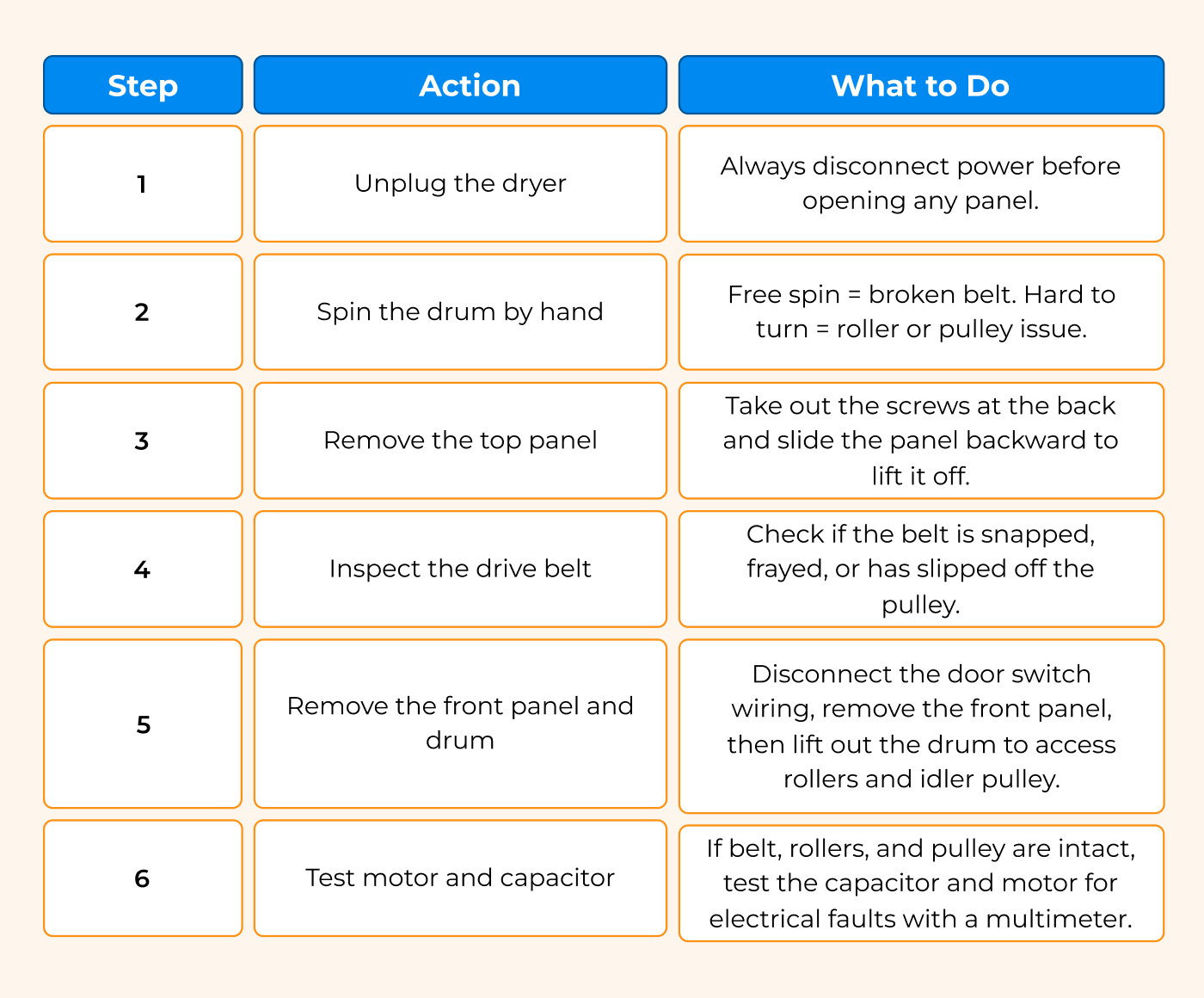
Before opening the dryer, try this: open the door and spin the drum by hand. What happens next tells you a lot.
Drum spins too freely with no resistance the drive belt is broken. This is the most common cause of an LG dryer drum not spinning.
Drum is hard or impossible to turn a worn drum roller or seized idler pulley is creating resistance and blocking rotation.
Drum feels normal by hand but won't spin during a cycle the motor, capacitor, or door switch is the likely culprit.
Common Causes
Broken Drive Belt The drive belt wraps around the drum, the idler pulley, and the motor pulley. When it snaps, the motor runs but the drum stays still. If the drum spins completely freely by hand with zero resistance, the belt is broken and needs replacement. This is the single most common cause of an LG dryer drum not spinning across all models.
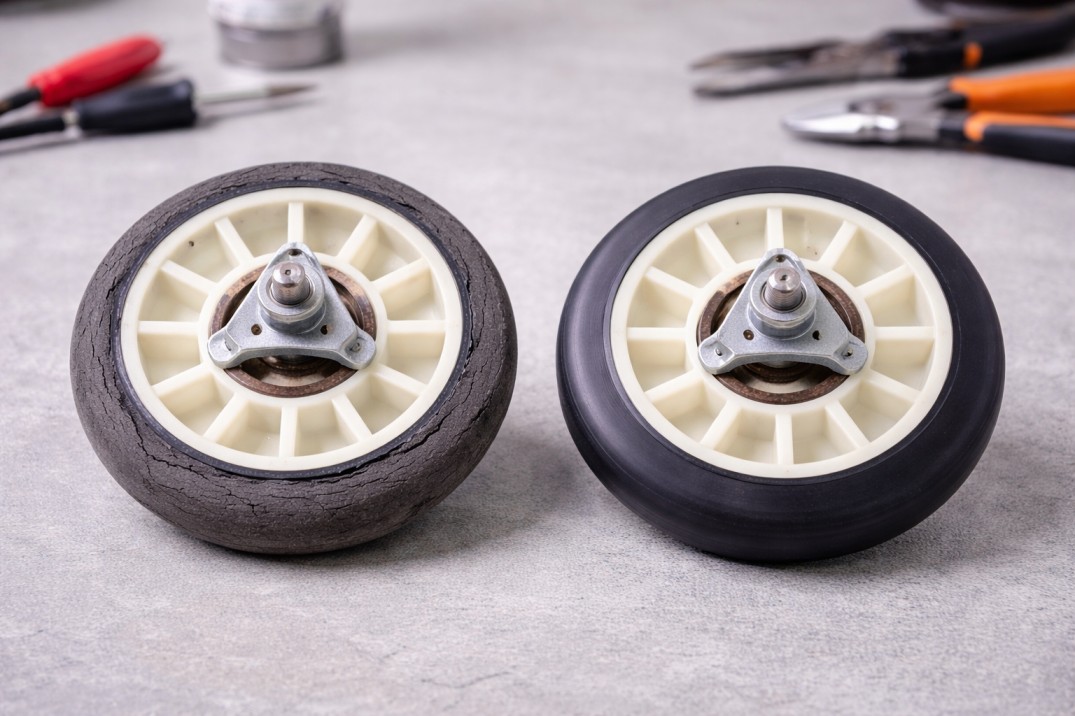
Worn Drum Rollers Drum rollers support the weight of the drum as it rotates. Over time they wear down, flatten, or seize creating friction that prevents the drum from turning smoothly. A dryer with worn rollers often makes a rumbling or squealing noise before the drum stops spinning entirely. When replacing rollers, all of them should be replaced at the same time to ensure even support.
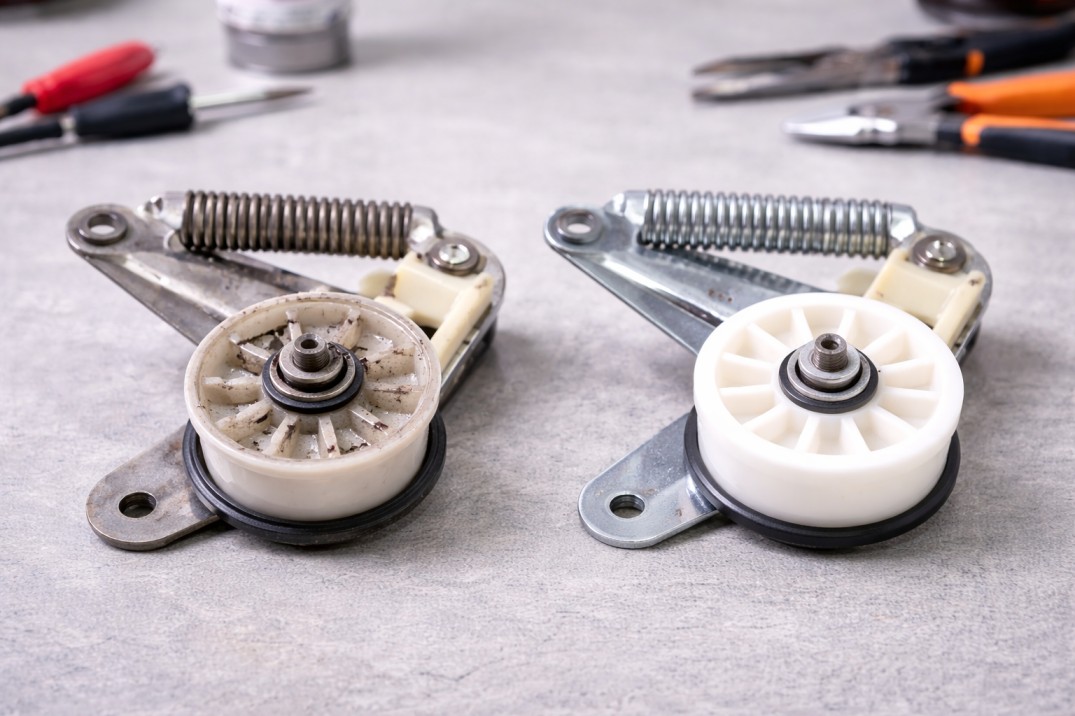
Faulty Idler Pulley The idler pulley keeps constant tension on the drive belt. If it becomes stuck, worn, or breaks apart, the belt loses tension and slips off stopping the drum. A seized idler pulley also places extra strain on the motor, which can lead to secondary failures if left unaddressed.
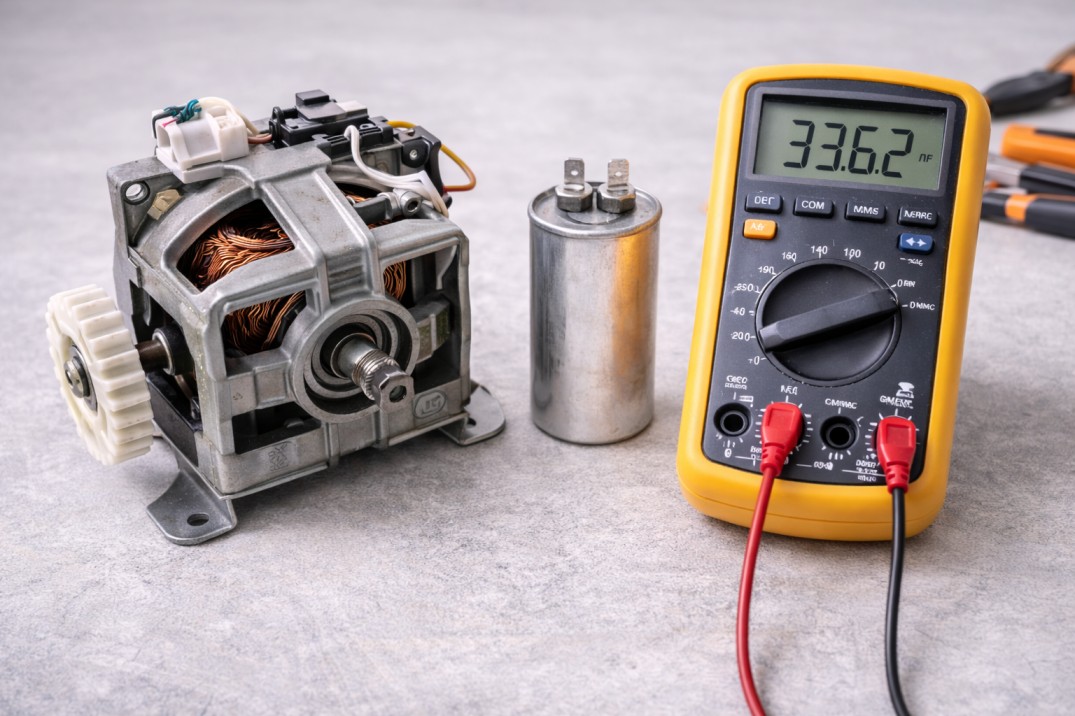
Motor or Capacitor Failure If the dryer hums when you press start but the drum doesn't move, the motor capacitor is the first suspect. The capacitor provides the initial electrical boost the motor needs to start rotating. Without it, the motor hums under load but can't overcome inertia. If the capacitor tests fine but the motor still won't run, the motor itself has failed. This is one of the more expensive repairs on an LG dryer drum not spinning diagnosis.
Faulty Door Switch The door switch tells the control board the door is closed and the cycle can begin. A failed door switch means the dryer receives no signal to start the drum won't spin regardless of what else is working. Test the switch with a multimeter for continuity with the door closed.
How to Access and Check Components
How to Get the LG Dryer to Just Spin
If you need to run a spin-only cycle to test whether the drum moves after a repair, select the Air Dry or Air Fluff setting these run the drum without activating the heating circuit. This is useful for confirming the mechanical components are working before running a full heated cycle. If the drum still won't move on Air Dry, the problem is mechanical or electrical, not heat-related. For persistent stopping issues even after the drum is confirmed spinning, see our guide on why LG dryers stop after a few minutes.
When to Call a Technician
Replacing a drive belt is a manageable DIY repair for most people the parts are inexpensive and the process is well-documented. Drum rollers and the idler pulley are also replaceable with basic tools. However, motor and capacitor failures involve electrical components that require testing equipment and some technical knowledge to diagnose safely. A misdiagnosed motor replacement is an expensive mistake.
If the LG dryer drum not spinning problem persists after belt and pulley inspection, or if the dryer hums but won't start, professional diagnosis is the safer route. Drum issues can also overlap with other mechanical failures our guide on dryer drum not turning causes and fixes covers the full range across all brands.
Promix Appliance Repair handles LG dryer mechanical repairs as part of our complete washer and dryer repair service and LG appliance repair service. Call (781) 666-9565 to schedule service.
FAQ
Why is my LG dryer drum not spinning?
The most common cause is a broken drive belt test it by spinning the drum by hand. If it spins freely with no resistance, the belt is snapped. Other causes include worn drum rollers, a seized idler pulley, a failed motor capacitor, or a faulty door switch.
Why is my dryer drum not rotating?
On LG dryers specifically, drum rotation failures almost always trace back to the drive belt, idler pulley, or drum rollers. Test the drum by hand first to narrow down which component has failed before disassembling the machine.
Why is my LG dryer drum hard to turn by hand?
Resistance when turning the drum by hand points to worn or seized drum rollers, a stuck idler pulley, or debris caught between the drum and the housing. If the drum won't turn at all, something may be physically jammed inside.
How do I get my LG dryer to just spin?
Select Air Dry or Air Fluff mode these run the drum without heat and are useful for testing mechanical function after a repair. If the drum still won't rotate in these modes, the issue is mechanical and not cycle-related.

