
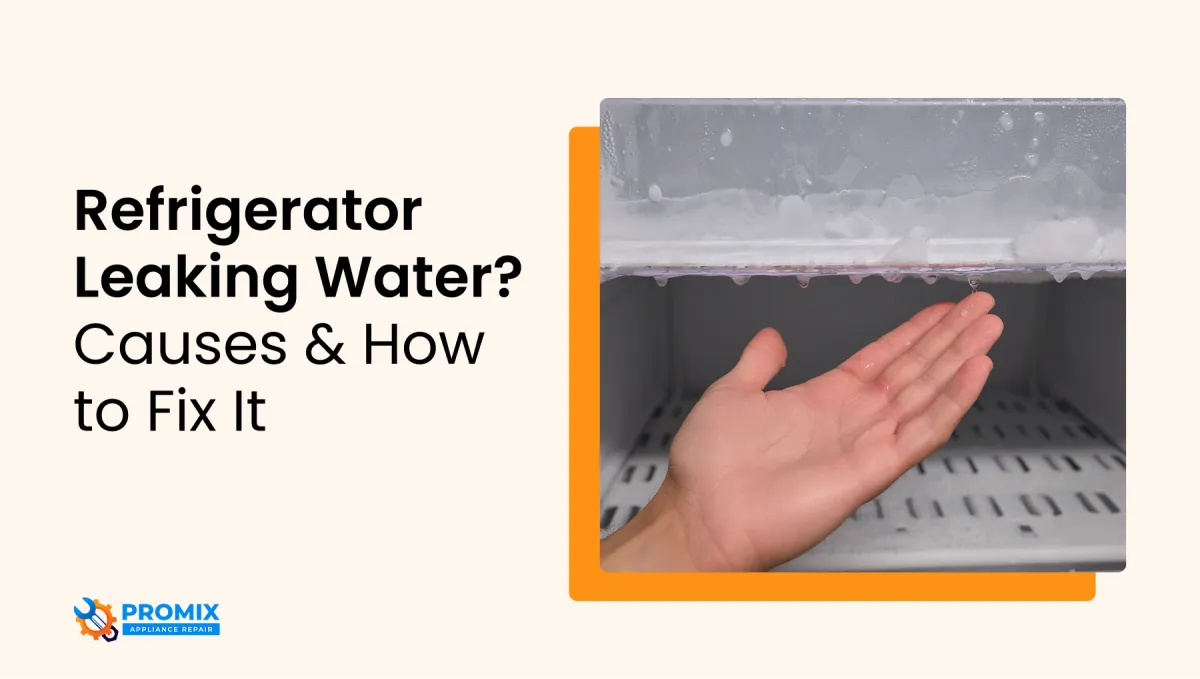
Refrigerator Leaking Water? Causes & How to Fix It
Key Takeaways:
A refrigerator leaking water is almost always caused by one of five things: a clogged defrost drain, a frozen or cracked water line, a full or cracked drain pan, a clogged water filter, or a faulty water inlet valve.
Most of these are low-cost fixes you can handle yourself in under an hour — a puddle rarely means the fridge is dying.
The location of the water is the biggest clue to the cause: interior pooling points to the defrost drain, while leaks behind the unit point to the line, pan, or valve.
A clogged defrost drain is the most common culprit and is usually solved with a simple warm-water and baking-soda flush.
A faulty water inlet valve is the one cause that typically requires a part replacement rather than a quick clean.
Regular prevention flushing the drain twice a year, replacing the filter every six months, and keeping the
fridge level prevents most repeat leaks.
Custom HTML/CSS/JavaScript
A refrigerator leaking water is almost always caused by one of five things: a clogged defrost drain, a frozen or cracked water line, a full or damaged drain pan, a clogged water filter, or a faulty water inlet valve. The good news is that most of these are low-cost fixes you can handle yourself in under an hour no technician required for the simple ones.
A puddle under the fridge is easy to panic over, but it is rarely a sign that your refrigerator is dying. In most homes, the leak comes from a blocked drain or a loose connection, not a failing compressor. The trick is figuring out where the water is coming from first, then matching it to the cause. Below, we start with a quick diagnosis, then walk through each cause, exactly how to fix it, the tools you will need, and how to make sure your refrigerator leaking water problem does not come back.
First, Where Is the Water Coming From?
Before you grab a wrench, look at where the water collects. The location is the single biggest clue to what is behind your refrigerator leaking water, and it can save you an hour of guessing:
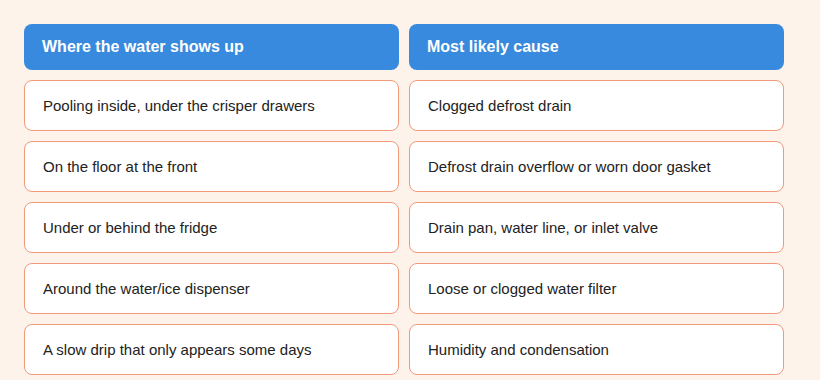
Once you know the zone, jump to the matching cause below. A quick tip before you start: lay a dry paper towel over the suspect area and check it after an hour. Seeing exactly where the fresh water lands turns a mystery into a five-minute diagnosis.
Tools you will likely need
Most of these repairs need only basic supplies: a hairdryer or hot water to thaw ice, a turkey baster, a pipe cleaner or small funnel, a towel, an adjustable wrench, and a replacement water filter or inlet valve if those turn out to be the culprit. Nothing here requires specialist equipment.
1. Clogged Defrost Drain (The Most Common Cause)
Inside every fridge is a small defrost drain that carries melted frost down to a pan underneath. When food debris, mineral scale, or a plug of ice blocks it, the melt water has nowhere to go and backs up over the drain lip — which is why a refrigerator leaking water inside, under the drawers, almost always points here. You may also notice a sheet of ice forming on the freezer floor.
How to fix it:
Unplug the fridge for safety before reaching inside.
Empty the bottom shelf and locate the drain hole at the back of the freezer floor or fridge compartment.
Thaw any visible ice with a hairdryer on a low setting — never use a sharp tool that could puncture the liner.
Flush the drain with a mix of warm water and a teaspoon of baking soda using a turkey baster; the baking soda helps break down greasy buildup.
Clear the exit end, which usually sits just above the drain pan, with a pipe cleaner until water runs through freely.
Run this flush twice a year and a clogged drain will rarely trouble you again.
2. Frozen or Cracked Water Line
If your model has an ice maker or a door dispenser, a thin plastic supply line runs to the back of the unit. A cracked line, a pinched section, or a loose compression fitting sends water straight to the floor. That is why a refrigerator leaking water from the bottom or pooling behind the unit is so often a supply-line problem rather than anything inside the cabinet.
How to fix it: Gently pull the fridge away from the wall, shut off the water supply valve (usually under the sink or behind the fridge), and inspect the full length of the line and every connection. Tighten any loose fittings by hand plus a quarter turn with a wrench. If you spot a crack, a milky bulge, or a section swollen with ice, replace that line — they are inexpensive and push-fit on most modern fridges. Let any frozen stretch thaw completely before you restore the water and restart.
3. Overfilled or Cracked Drain Pan
All that melted frost ends up in a shallow drain pan beneath the unit, where it is meant to evaporate. In hot, humid weather the pan can simply fill faster than it evaporates and overflow, and an older pan can develop hairline cracks — either way, you get water pooling under the refrigerator with no obvious source inside.
How to fix it: Slide the fridge out, locate the pan at the front or rear base (you may need to pop off a lower grille), and pull it out carefully so you do not slosh it. Empty it, wipe it dry, and hold it up to the light to check for cracks. Reseat a sound pan firmly in its bracket, or replace a cracked one with the correct part for your model. If the pan overflows constantly, that is usually a sign the defrost drain above it is dumping too much water — so revisit cause number one.
4. Clogged or Loose Water Filter
A water filter that is cracked, the wrong size, expired, or simply not pushed all the way into place is a frequent and easily overlooked reason for a refrigerator leaking water near the dispenser or at the front-bottom of the cabinet. Aftermarket filters that do not seal properly are a common offender.
How to fix it: Twist out the filter and inspect the housing and its rubber O-ring for damage or misalignment. Reinstall a genuine, correctly sized filter and push until it clicks fully home. If yours is past its service date — most need changing about every six months — replace it. After reinstalling, run a few gallons through the dispenser to clear trapped air, which can otherwise cause spitting and drips that look like a leak.
5. Faulty Water Inlet Valve
The water inlet valve is the electrically controlled gate that lets water into the ice maker and dispenser lines. When its body cracks or an internal seal fails, it weeps water at the lower back of the fridge, near the floor. This is the one cause on the list that usually calls for a part replacement rather than a quick clean, because the valve is a sealed component.
How to fix it: Unplug the fridge and shut off the water. Find the valve at the lower rear, where the supply line enters, and check for moisture, corrosion, or crusty mineral deposits around the fittings. Tighten the connections first — sometimes that is all it needs. A valve that still leaks, or that has visibly cracked, should be replaced. If you are not fully comfortable working with combined water and electrical connections, this is the right point to bring in a professional.
How to Stop a Refrigerator Leaking Water: Step by Step
If you are not sure which cause applies, work through this order and you will catch the vast majority of leaks without any special skills:
Dry the area and watch. Wipe everything down, lay a towel or paper, and note exactly where the new water appears over the next hour.
Level the fridge. A unit that tilts forward stops the defrost system from draining correctly. Adjust the front feet so the fridge sits level or leans back a hair.
Clear the defrost drain using the warm-water flush method above — this alone solves most interior leaks.
Check and reseat the water filter, replacing it if it is old or aftermarket.
Inspect the line, drain pan, and inlet valve behind the unit for cracks and loose fittings.
Replace the door gasket if it is cracked or no longer sealing, since a poor seal lets warm, humid air in and creates condensation that drips inside.
Most cases of a refrigerator leaking water are solved somewhere in steps two through four, so resist the urge to order expensive parts before you have worked through the simple checks.
Brand-Specific Leaks Worth Knowing
While the core causes are the same across every make, a few brands have well-known quirks. Samsung French-door models are especially prone to defrost-drain ice buildup, which shows up as water under the deli drawer — a Samsung fridge with this pattern usually needs the drain cleared and a small heater clip added. LG refrigerators with dispensers most often leak from the water line or filter housing rather than the drain. And many Whirlpool units leak from an overfilled drain pan in summer humidity. Knowing your brand's tendency helps you check the likeliest spot first.
Prevention: Keep It From Happening Again
A leaking fridge is far easier to prevent than to mop up. Build these quick habits into your routine and you will rarely see standing water again:
Flush the defrost drain with warm water twice a year.
Replace the water filter roughly every six months.
Check the door gaskets for cracks and clean them so they seal tightly.
Keep the fridge level and give it a few inches of breathing room at the back.
Glance behind the unit during seasonal cleaning to catch a kinked or sweating water line early.
When to Call a Professional
Some leaks go beyond a quick clean. Call a technician if the water inlet valve is failing, the leak keeps returning after you clear the drain, or you notice water near the compressor or any electrical parts. A persistent leak can warp your flooring and, left unaddressed, damage the very components that keep your fridge cold — the same parts behind a refrigerator that isn't cooling. If your ice maker is also misbehaving, our guide on an ice maker not filling covers the shared water-supply causes, and our refrigerator repair cost guide shows what a professional fix runs locally.
Refrigerator Leaking Water FAQ
Why is my refrigerator leaking water on the floor?
The most common reasons are a clogged defrost drain overflowing, a cracked or loose water supply line, or a full drain pan underneath. Start by checking whether the water is coming from inside the cabinet (a drain issue) or from behind the unit (a line or valve issue).
Can I keep using a refrigerator that is leaking water?
You can in the very short term, but it is best to stop the leak quickly. Standing water can warp flooring and reach electrical parts. Wipe it up, put a towel down, and diagnose the cause the same day rather than letting it run for weeks.
Is a leaking refrigerator expensive to fix?
Usually not. A clogged drain, drain pan, or filter fix costs little to nothing beyond your time. A new water inlet valve or supply line is a modest part, and even a professional repair is typically far cheaper than replacing water-damaged flooring or cabinets.
How do I stop my fridge from leaking water again?
Keep the fridge level, flush the defrost drain a couple of times a year, replace the water filter on schedule, and check the supply line for kinks or cracks during regular cleaning. These four habits prevent the large majority of repeat leaks.
Could a refrigerator leaking water mean it needs replacing?
Rarely. Leaks are almost always a drain, line, filter, or valve issue — all repairable. Replacement only enters the picture if the leak is tied to a much larger failure on an already old unit, which a technician can confirm quickly.

