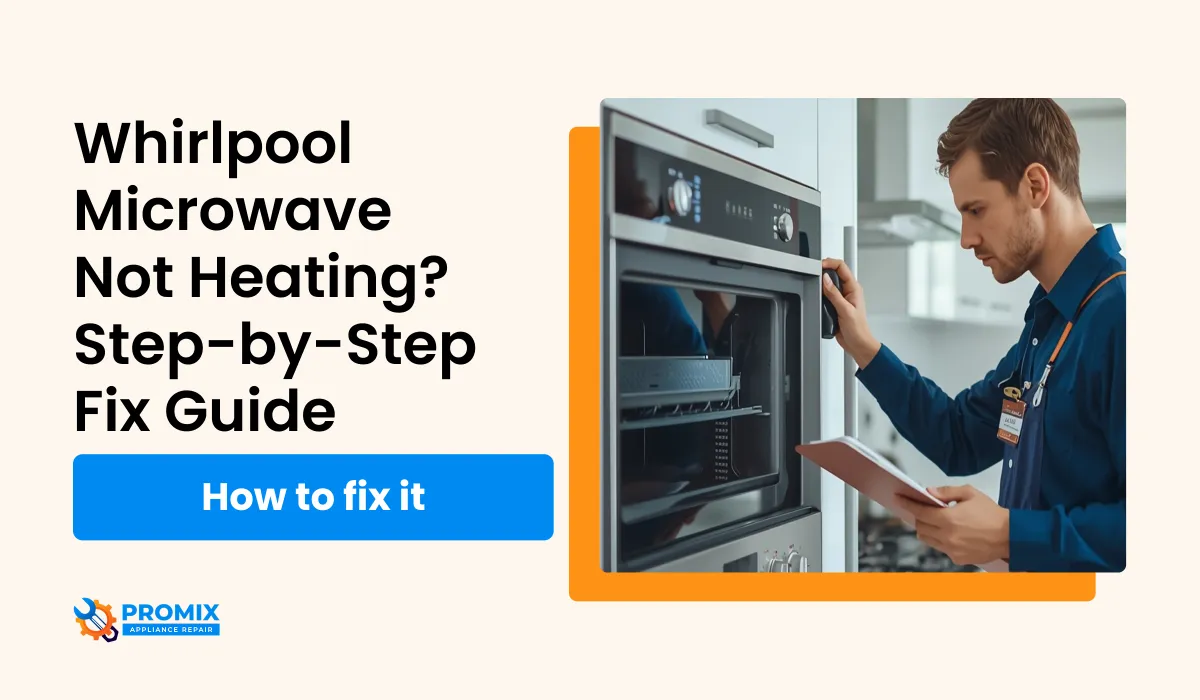
Whirlpool Microwave Not Heating? Step-by-Step Fix Guide
If your Whirlpool microwave not heating food properly, you're not alone. This is one of the most common microwave problems homeowners face — the appliance turns on, the turntable spins, the light works, but nothing heats up. Before you assume the worst, there are several things you can check and potentially fix yourself. This guide walks you through every step, from simple safety checks to identifying faulty components.
Why Is My Whirlpool Microwave Not Heating?
When your microwave not heating food but running normally, it can be frustrating and confusing. The good news: the microwave is still functioning at some level, which helps narrow down the problem. There are several reasons why a Whirlpool microwave not heating, ranging from simple user errors to internal component failures.
Common reasons include:
A faulty door switch preventing the magnetron from activating
A blown thermal fuse that cuts power to the heating components
A failed high-voltage diode that can no longer power the magnetron
A defective magnetron — the core component responsible for generating heat
Power supply issues or a tripped internal breaker
If your microwave runs but won't heat, there's almost always a specific part at fault. Understanding which one requires a bit of investigation - which we'll walk through step by step.
What Causes a Microwave to Run but Not Heat?
Understanding microwave heating problems starts with knowing how a microwave works. Microwaves heat food using electromagnetic waves generated by a component called the magnetron. To power the magnetron, the microwave uses a high-voltage circuit that includes a capacitor, a diode, and a transformer. A failure in any of these components causes the microwave to run normally — but produce no heat.
Magnetron Failure
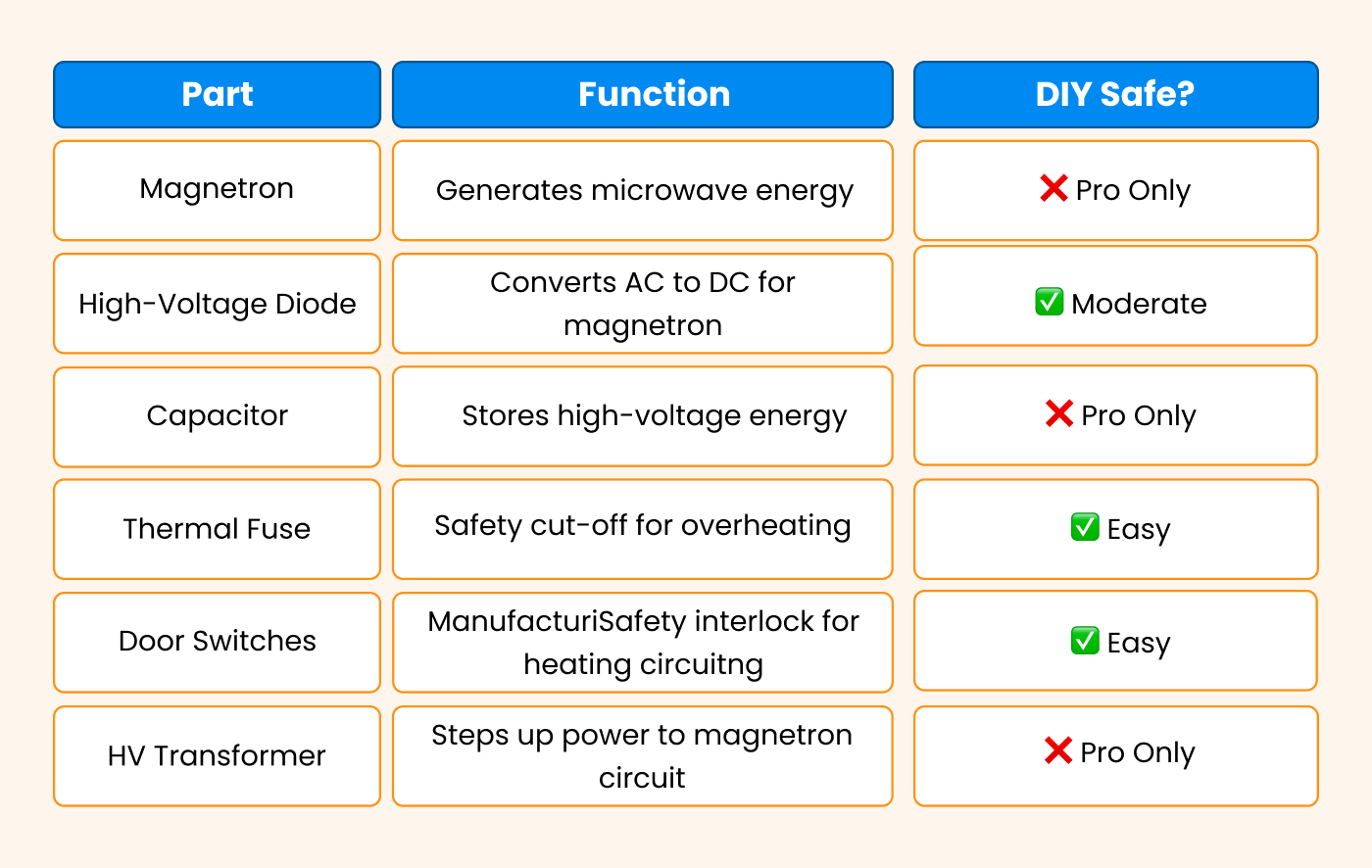
Magnetron failure is the most common reason a Whirlpool microwave won't heat. The magnetron converts electrical energy into microwave radiation that heats your food. When it fails, the microwave operates normally in every other way. Signs include buzzing sounds, burning smell, or simply no heating at all.
Microwave Diode Problem
The high-voltage diode converts AC power to DC to power the magnetron. A microwave diode problem means the magnetron doesn't receive the voltage it needs. A burned diode often emits a visible burn mark or unusual smell and can be tested with a multimeter.
Microwave Capacitor Issue
A microwave capacitor issue prevents the entire high-voltage circuit from working. The capacitor stores high-voltage energy and works with the diode to power the magnetron.
Warning: Capacitors can store lethal electricity even when the microwave is unplugged. Never touch or test a capacitor without professional training and proper discharge tools.
Microwave Thermal Fuse
The microwave thermal fuse is a safety device that blows when the microwave overheats. When it blows, the microwave may still turn on and run — but won't heat. It's relatively inexpensive to replace, but the underlying overheating cause should also be fixed.
Door Switch Failure
Most microwaves have two or three door interlock switches. If even one fails, the heating circuit won't activate — even though the light, turntable, and timer still work. Door switches are one of the easiest parts to test and replace.
Step-by-Step Guide: How to Fix a Whirlpool Microwave That Doesn't Heat
This microwave repair guide covers the safe, logical steps for troubleshooting microwave issues at home. For a DIY microwave heating fix, follow this sequence carefully.
Step 1 - Safety First: Unplug the Microwave
Before doing anything, unplug the microwave. Microwaves contain high-voltage capacitors that hold dangerous electrical charges even after being unplugged. Never open the casing while plugged in.
Step 2 - Check Power Supply and Settings
Make sure the microwave is set to a proper power level (not demo mode or 0%). Check the outlet works by plugging in another appliance. Also check your home's circuit breaker — a partially tripped breaker can cause the microwave to run without heating.
Step 3 - Inspect the Door Switches
Open and close the door several times — listen for a clear click each time. If the door feels loose or doesn't latch firmly, a door switch may be broken. Test with a multimeter set to continuity mode: a functioning switch shows continuity when the door is closed.
Step 4 - Test the Thermal Fuse
Access the thermal fuse (usually located near the cavity or magnetron) and test with a multimeter. A working fuse shows continuity — no continuity means it's blown and needs replacing. Also investigate what caused the fuse to blow (usually blocked vents or heavy use).
Step 5 - Test the High-Voltage Diode
A healthy diode allows current to flow in one direction only. If the diode shows continuity in both directions or none at all, replace it. Note: you need a multimeter with a 9V battery to properly test high-voltage diodes.
Step 6 - Magnetron or Capacitor: Call a Professional
If the above checks don't resolve the issue, the magnetron or capacitor is likely at fault. These components involve extremely high voltage — dangerous without professional tools and training. Contact a certified appliance repair technician.
Which Parts Could Be Causing Heating Issues?
Here's a quick reference for the most common parts behind a Whirlpool microwave not heating. For brand-specific details, refer to Whirlpool's official microwave not heating guide.
You suspect magnetron or capacitor failure — these involve lethal high-voltage components
You notice burning smells, sparking, or unusual noises
The microwave has been dropped or physically damaged
You've replaced a component and the problem still persists
You're not comfortable with electrical repair work
High-voltage capacitors can deliver a fatal electric shock even when unplugged. A qualified technician has the right tools to safely discharge capacitors and diagnose complex issues.
If you need fast, reliable appliance repair, our team at Promix Appliance Repair is here to help. We specialize in Whirlpool microwave repair and all major household appliances - with honest pricing and same-day service options.
Frequently Asked Questions
Q: Microwave runs but won't heat. What should I check first? Start by checking the door switch, then the thermal fuse and magnetron. Make sure the microwave is unplugged before inspecting any internal components.
Q: Why does my Whirlpool microwave turn on but not heat food? Common causes include a faulty magnetron, bad high-voltage diode, or blown thermal fuse.
Q: Can I fix a microwave that doesn't heat myself? Yes, for simple checks like door switches or fuses. But replacing the magnetron or capacitor is dangerous and requires a professional.
Q: How long does it take to repair a microwave that isn't heating? Simple fixes take 10–30 minutes. Complex component replacements may take 1–2 hours depending on parts availability.
Q: Is it safe to use a microwave that spins but doesn't heat? No. Continued use may damage the microwave or cause safety hazards. Turn it off and unplug it until repaired.

