Appliance Repair Safety Risks Homeowners Ignore – How to Stay Safe
Every year, thousands of homeowners attempt to fix their own household appliances and many end up facing consequences far worse than a broken dishwasher. From electrical shocks to gas leaks, the appliance repair safety risks that most people overlook are real, serious, and often invisible until it’s too late.
This guide breaks down the most critical dangers, explains what you can safely handle yourself, and helps you understand exactly when to call a professional.
Whether you're dealing with a refrigerator that won’t cool, a dryer making strange noises, or a stove burner that won’t ignite, knowing how to approach the repair safely is just as important as knowing how to fix it. At Promix Appliance Repair, we've seen firsthand what can go wrong when safety steps are skipped. Here's what you need to know before you ever reach for a screwdriver.
Why Appliance Repair Safety Risks Are More Serious Than You Think
Most people assume that unplugging an appliance makes it safe to work on. This is one of the most common - and dangerous - misconceptions in DIY home repair.
Modern appliances are complex systems involving:
High-voltage capacitors
Pressurized refrigerant lines
Gas connections
Sensitive electronic boards
Each presents its own unique hazard, and many retain dangerous energy long after the power is cut.
The Consumer Product Safety Commission (CPSC) reports thousands of appliance-related injuries annually, many tied directly to improper repair attempts. The risks aren’t limited to the person doing the work — improperly repaired appliances can start fires, cause flooding, or leak carbon monoxide, putting entire households at risk.
Key takeaway: Preventative maintenance and basic upkeep are generally safe. The danger lies in underestimating the hazards inside appliance panels.
Hidden Electrical Hazards in Common Household Appliances
Electricity is the most common cause of appliance-related injury during DIY repairs. The electrical dangers inside appliances are far more nuanced than most homeowners expect - and far more likely to catch someone off guard.
Water Damage and Mold: The Long-Term Consequences
A washing machine improperly reassembled after a DIY repair may develop a slow leak that saturates the floor and subfloor over weeks. This creates an ideal environment for mold growth, which can spread to walls and become a major remediation project — often costing far more than a professional repair would have. For washing machine error codes that signal serious issues, see our Maytag washing machine error codes list.
Capacitors: The Hidden Power Source That Can Kill
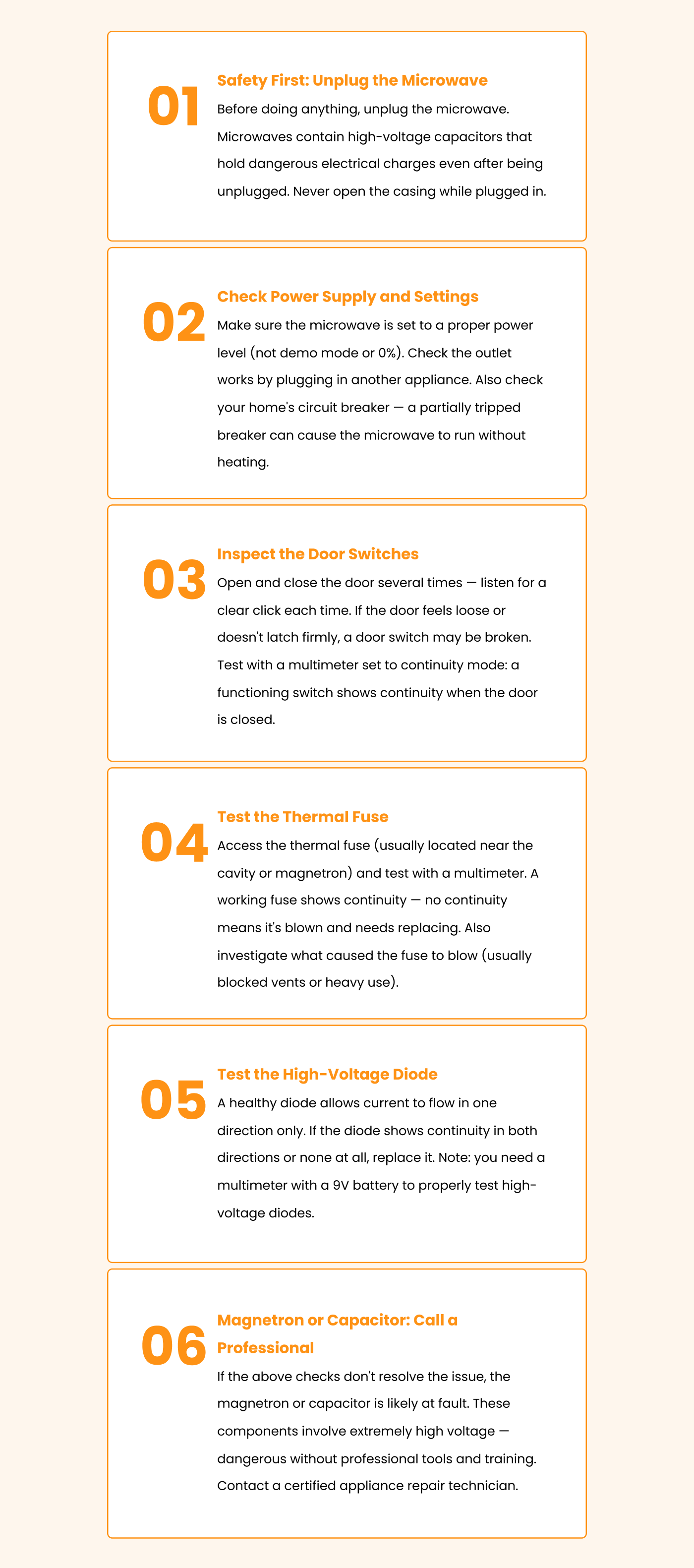
Capacitors are found in microwaves, air conditioners, washing machines, and many other appliances. They store electrical charge - sometimes thousands of volts — and do not discharge when you unplug the unit. A technician who touches an undischarged capacitor can receive a lethal shock even hours after unplugging. The capacitor in a standard microwave can hold a charge of 2,100 volts or more. If your microwave has stopped working, check our guide on Whirlpool microwave not heating before attempting any repair.
Capacitors: The Hidden Power Source That Can Kill
Capacitors are found in microwaves, air conditioners, washing machines, and many other appliances. They store electrical charge sometimes thousands of volts and do not discharge when the appliance is unplugged.
Touching an undischarged capacitor can result in lethal shock even hours after unplugging.
Microwave capacitors, for example, can hold 2,100 volts or more.
Wiring Issues and Short Circuits
Older appliances may have frayed or degraded wiring. Disturbing these during a repair can trigger:
Short circuits
Sparks
Fire
Repair tips:
Always check wiring condition before attempting internal repairs
Never reconnect power until the appliance is fully reassembled
Gas Appliance Repair Safety Risks: What You Absolutely Cannot Ignore
Gas appliances - stoves, ovens, dryers, and range hoods - introduce an entirely different category of hazard. Unlike electrical dangers that are contained inside the appliance, gas-related risks can spread throughout your home within minutes.
Gas Leaks: Silent, Invisible, and Potentially Explosive
Natural gas is colorless and nearly odorless. Suppliers add mercaptan - the sulfur compound that gives gas its "rotten egg" smell - so leaks can be detected.
Risks:
Small, slow leaks may be undetectable by smell alone
A tiny leak can accumulate and ignite from a single spark
Carbon monoxide poisoning can occur gradually without obvious warning
Why Gas Repairs Always Require a Professional
Gas line repairs, burner replacements, and igniter work should always be handled by a certified technician.
Working on gas lines without proper licensing is illegal in most jurisdictions
Margin for error is zero - consequences are immediate and catastrophic
If you smell gas:
Leave the house immediately
Avoid touching electrical switches
Call your gas provider and emergency services
Water and Appliance Repairs: A Combination That Causes Serious Injuries
Washing machines and dishwashers combine electrical components with active water systems, creating a high risk of electrocution.
Water Damage and Mold: Long-Term Consequences
A washing machine improperly reassembled after a DIY repair may develop a slow leak, saturating the floor and subfloor over weeks.
Creates an ideal environment for mold growth
Mold can spread to walls and require costly remediation
Often costs far more than a professional repair
Dishwasher Repairs and Water Pressure Risks
Dishwashers operate under significant water pressure. Improperly connected hoses or inlet valves can result in sudden, high-volume water release, enough to flood a kitchen in minutes.
Safety tip: Always shut off the water supply valve before working on a dishwasher and verify all connections before restoring water flow.
Appliance Repair Safety Tips for Homeowners Who Want to DIY
Not every appliance issue requires a service call. Knowing the difference between safe and risky tasks is one of the most valuable appliance repair safety tips.
Safe DIY Tasks Most Homeowners Can Handle
Cleaning refrigerator coils and door seals
Replacing a refrigerator water filter
Cleaning dishwasher filters and spray arms
Cleaning dryer lint traps and exhaust venting
Wiping down oven interiors and cleaning stove grates
Replacing range hood filters
Tasks That Almost Always Require a Professional
Any repair involving internal wiring or circuit boards
Refrigerant recharge or refrigerator compressor work
Gas burner or igniter replacement
Microwave internal component repair (especially high-voltage parts)
Washing machine motor or control board replacement
Dryer heating element replacement (electric models)
Any repair where you detect unusual smells, sparks, or sounds
How DIY Appliance Repairs Can Void Your Warranty
Attempting repairs yourself can void your appliance warranty.
Most manufacturers require authorized service to maintain coverage
Unauthorized repairs or non-OEM parts can cancel warranty protection
Cost of losing warranty coverage on high-end appliances can reach hundreds or thousands of dollars
Tip: For appliances still under warranty, calling the manufacturer or an authorized repair service is almost always the right move.
The Real Cost Comparison: DIY vs. Professional
Hidden Costs of Failed DIY Repairs
More expensive professional repair required to undo incorrect work
Misdiagnosis is common - one part replaced, problem persists
Cycle of trial-and-error parts replacement can cost more than a single professional visit
Indirect Costs
Appliance downtime
Spoiled food
Eating out and household disruption
Professional technicians typically carry common parts and can complete repairs in a single visit. The team at Promix Appliance Repair offers transparent pricing and honest assessments, helping you decide whether repair or replacement makes more financial sense.
Warning Signs That Mean You Should Stop and Call a Technician
Even if you’ve started a DIY repair, stop immediately if you notice:
Burning plastic, rubber, or a sulfur/rotten egg odor
Sparks or arcing inside the appliance
Tripped circuit breaker when powered on
Corrosion, blackened wires, or burn marks
Water leaks you cannot identify
Unsure whether a component is safe to touch
Inability to reassemble the appliance
Do not reconnect power. Document what you were working on and contact a qualified technician. Transparency about previous work helps them diagnose the issue faster.
Refrigerator and Freezer Repair Safety: What Makes These Appliances Different
Refrigerators and freezers combine electrical systems with pressurized refrigerant lines.
Handling refrigerant without EPA Section 608 certification is illegal in the U.S.
Health risks include skin/eye irritation, frostbite, and respiratory damage
DIY tips: Some components, like compressors, start relays, and defrost heaters, can be replaced by skilled DIYers, but correct diagnosis usually requires professional expertise.
How to Safely Prepare for a Professional Appliance Repair Visit
Before the technician arrives:
Clear at least three feet of working space around the appliance
Gather model number, serial number, purchase receipts, and warranty paperwork
Note problem timeline, symptoms, sounds, smells, or error codes
Inform the technician of any attempted repairs
Keep children and pets safely away from the work area
Final Thoughts on Appliance Repair Safety Risks
Appliance repair safety risks aren’t meant to make homeowners feel helpless - they’re meant to inform and empower.
Key takeaway: When in doubt, call a professional. The cost of a service call is almost always less than the cost of a repair gone wrong — financially, physically, and in terms of your appliance's lifespan.
Promix Appliance Repair offers honest assessments, transparent pricing, and professional repair for all major household appliances.

